For Who or For Whom? Master the Grammar Rule Fast teaches how to use the right word when writing. Who does an action, and whom receives it. Learning this difference helps young learners write clean and correct sentences that sound smart and confident.
In English, every word has a job. Who acts like a helper that tells who’s doing something. Whom shows who gets the action. When children understand these small roles, they start writing with better balance and stronger understanding of grammar.
Teachers often remind students to practice daily. Using who and whom correctly builds trust in writing. It also makes every sentence clearer and more professional. With steady effort, any learner can quickly master this simple grammar rule.
Understanding “Who” vs “Whom” – Grammar Made Simple
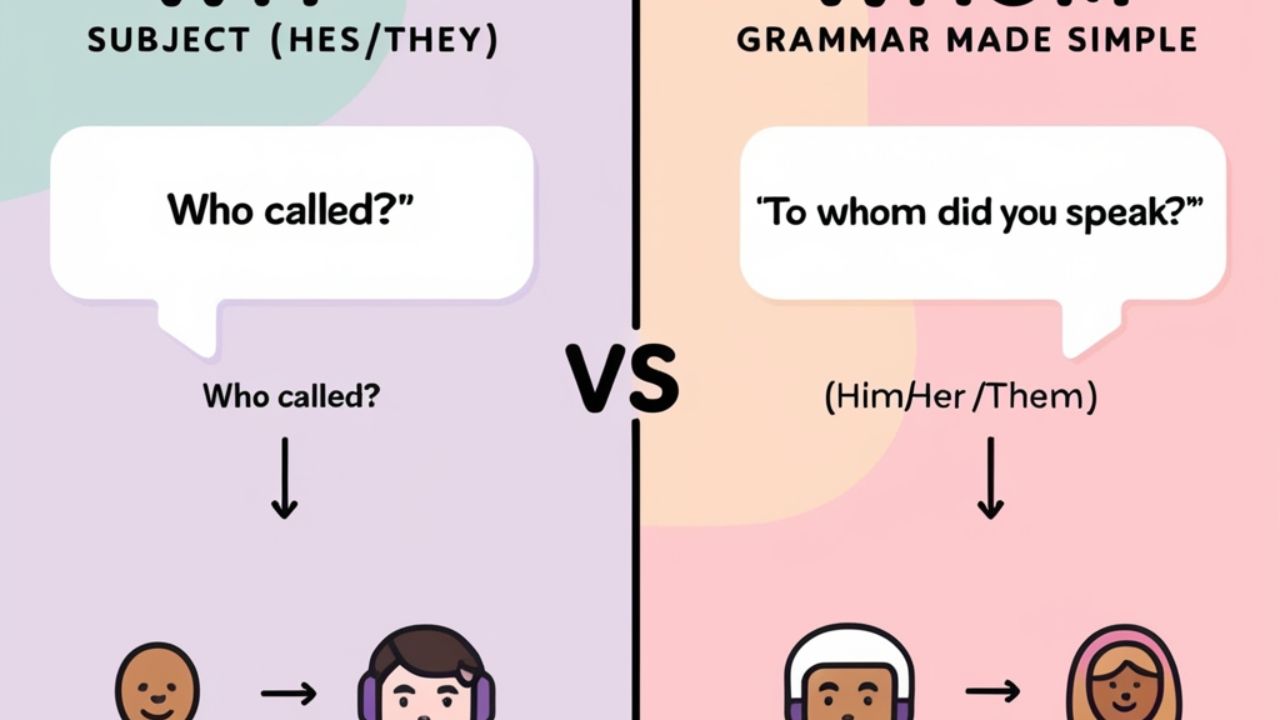
Understanding “Who” vs “Whom” – Grammar Made Simple helps young learners use words the right way. Who is the doer of an action, and whom is the receiver. Knowing this rule makes writing stronger, clearer, and easier for every beginner to follow.
Learning how to use who and whom builds good grammar habits. These words show how actions move in a sentence. When children practice them daily, their speech and writing grow smoother, more correct, and full of confidence in every line.
| Pronoun | Role | Example |
| Who | Subject | Who called you? |
| Whom | Object | Whom did you call? |
Grammar Rules: Subjective vs Objective Pronouns
- Subjective pronouns like who, he, she, and they show the person doing the action in a sentence. These pronouns act as the subject and perform the main task.
- Objective pronouns such as whom, him, her, and them receive the action. They come after verbs or prepositions and complete the idea clearly.
- Learning both subjective and objective forms helps build strong grammar. It teaches how each pronoun fits naturally and makes every sentence neat and correct.
“For Whom” and the Preposition Rule
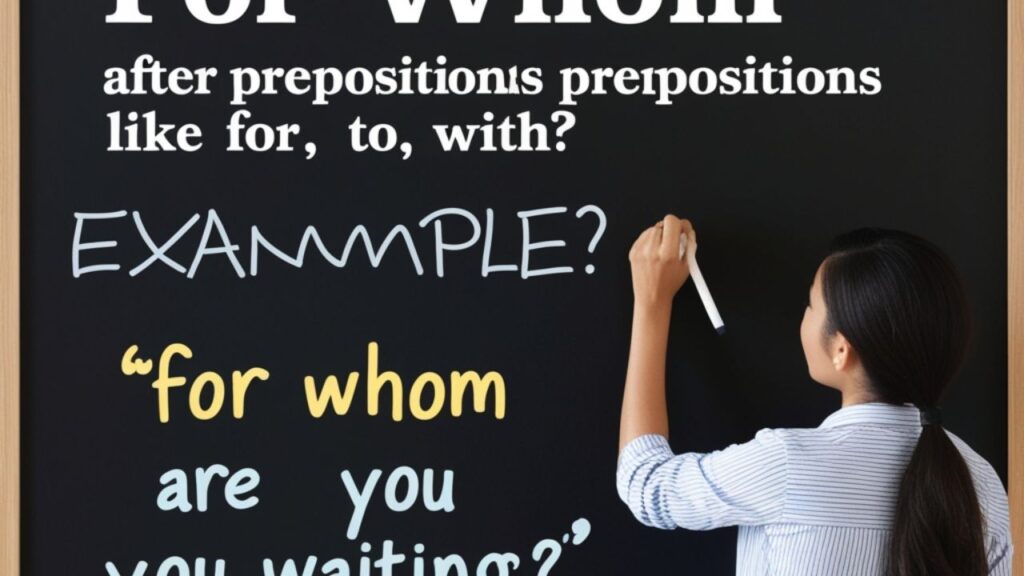
“For Whom” and the Preposition Rule teaches how to use words correctly after prepositions like for, to, or with. Whom fits these places because it receives the action. This small grammar point helps young learners write sentences that sound smooth and proper.
When a sentence has a preposition, whom often follows it to keep the grammar right. This simple rule improves every child’s writing style. Practicing it daily builds confidence and shows respect for proper English in both speech and writing.
Why “For Who” Still Happens – When It’s Accepted
Why “For Who” Still Happens – When It’s Accepted explains how people sometimes use words differently in daily talk. Many say for who because it sounds natural. In speaking with friends, this form feels easy and fits normal conversation patterns.
In formal writing, the correct form is for whom, yet in friendly talks, for who often appears. English changes over time, and people follow comfort in speech. Understanding both ways helps learners choose wisely based on the situation.
See also In Which vs Where: Key Grammar Rules Explained Clearly
Memory Tricks: Know Which One to Use
- Use the he/him rule to decide quickly. If “he” fits, use who. If “him” fits, use whom. This simple switch helps spot the right word fast.
- Remember the rhyme Him = Whom. Both end with “m,” making it easy to connect them in your mind when writing or speaking.
- After words like for, to, or with, think of whom. These prepositions need an object, so choosing correctly keeps your grammar smooth and correct.
Edge Cases & Tricky Constructions
- Some sentences sound formal when whom is used, such as “To whom are you speaking.” In everyday talk, many people prefer simpler forms like “Who are you talking to.”
- When a clause separates the verb and pronoun, finding the right word becomes harder. Always check which word performs the action or receives it before choosing who or whom.
- In creative or conversational writing, clarity matters more than strict rules. Using who instead of whom is acceptable if it keeps the sentence smooth and easy to understand.
The Role of “Whom” in Professional Writing
- Using whom correctly in formal documents shows attention to grammar and respect for language rules. It makes business letters, essays, and reports look polished and serious.
- Writers who use whom in the right place appear confident and knowledgeable. This small choice builds trust with readers and strengthens professional image.
- In offices and schools, proper grammar matters. Knowing when to use whom helps students and workers express ideas clearly and leave a lasting, respectful impression.
Why “Whom” May Be Fading – But Still Needed
Why “Whom” May Be Fading – But Still Needed shows how language keeps changing with time. Many people now use easier words in daily speech. Still, whom stays important in books, letters, and school writing because it keeps sentences correct and respectful.
Writers use whom to show care for good grammar. It adds a formal touch to every sentence. Even though children hear it less today, learning this word helps them sound clear, polite, and strong when writing or speaking in proper English.
Real Feel Examples: Putting It Into Practice
| Context | Incorrect | Correct |
| Business email | I don’t know for who this file is. | I don’t know for whom this file is. |
| Conversational text | I don’t know who it’s for. | I don’t know who it’s for. (Acceptable informally) |
| Interview question | For who did you complete the report? | For whom did you complete the report? |
Test Yourself: Quiz Time
- Fill in the blank: “To ___ are you sending the letter?” The right answer is whom because it follows a preposition and receives the action.
- Choose the correct form: “___ called the teacher for help.” The right choice is who since it performs the action in the sentence.
- Try this: “With ___ did you share your notes.” The correct word is whom because it comes after the preposition with and acts as the object.
Quick Reference: Who vs Whom Cheat Sheet
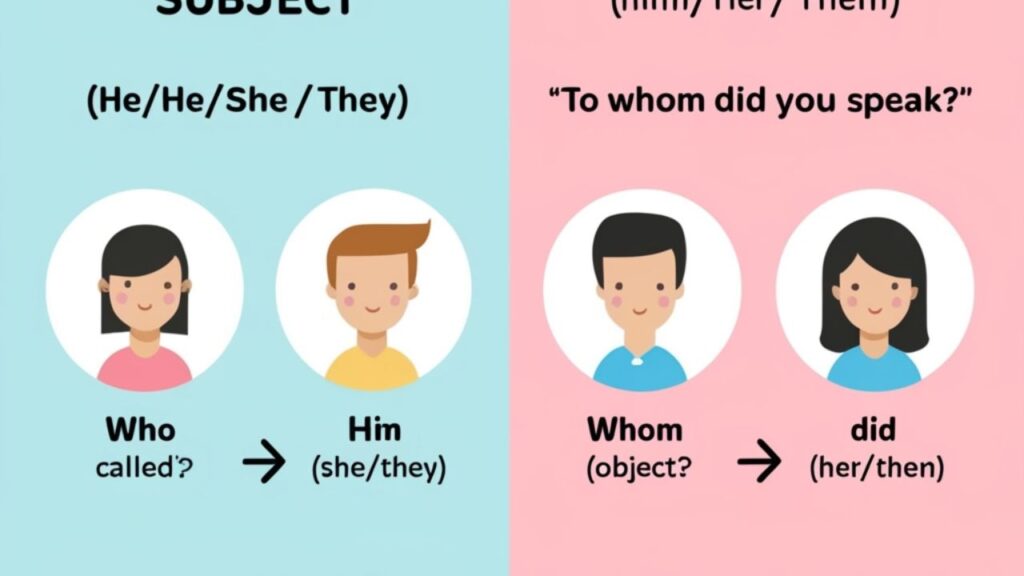
- Use who when the word performs the action, just like he or she. Example: Who finished the homework early.
- Use whom when the word receives the action, just like him or her. Example: To whom did you give the book.
- Remember this simple trick — He = Who, Him = Whom. This quick test helps you choose the right word every time with ease.
See also Flew or Flown: Easy Guide to Grammar Perfection
Conclusion
Conclusion helps learners remember how small grammar choices make writing shine. Using who and whom correctly shows care and understanding of English rules. It turns simple sentences into clear, polished lines that sound confident and easy to read.
Good writing grows with daily practice and patience. When children learn words like who and whom, they build a strong base for future learning. This knowledge makes communication smoother, respectful, and full of meaning in every kind of writing.
Further Reading & Resources
- Visit Merriam-Webster’s Guide on Who vs. Whom for clear explanations and real-world grammar examples.
- Explore Grammarly’s Who vs. Whom Guide to learn easy memory tricks and sentence tips for daily writing.
- Check The Chicago Manual of Style Online for formal grammar rules used in schools, research, and professional documents.
FAQs
Is it correct to say “for whom”?
Yes, it’s correct. Use “for whom” when referring to the object of a preposition like “for.”
What is the rule for who and whom?
Use “who” as the subject of a verb and “whom” as the object of a verb or preposition.
Which sentence correctly uses who or whom?
Example: “To whom should I speak?” is correct because “whom” is the object of “to.”
Is for whom outdated grammar?
Not outdated, but it sounds formal. Most people use “who” in casual conversation instead.

Join Bibcia on a journey to master English grammar. Discover easy lessons, writing tips, and practical examples designed to make learning grammar simple and effective.