Using a hyphen can change the meaning of words. In American English, writers often skip the hyphen, while British English prefers it for clarity. Small marks like this make sentences easier to read and avoid confusion in writing.
Prefixes like re- show that something happens again. Sometimes a hyphen is needed to separate words and prevent mistakes. Words such as re-sign or re-cover can mean very different things without proper punctuation. Using them correctly keeps writing clear.
Correct hyphen usage helps professional and school writing look neat. It improves understanding in essays, reports, and online content. Following the style guide of your audience ensures your writing is accurate and easy for readers to follow.
Why Hyphens Still Matter in Modern Writing
Even in modern writing, a hyphen can change the meaning of a sentence. Using it correctly prevents confusion and makes texts easier to read. Small punctuation marks help writers communicate clearly in professional, academic, and online content.
Proper hyphen usage also keeps writing neat and organized. It shows attention to detail and maintains clarity, especially when words with prefixes could be misunderstood. Following these rules ensures readers quickly understand the intended message without mistakes or ambiguity.
American vs. British English: Hyphen Usage Varies
Key Differences in Hyphenation
| Usage Style | American English | British English |
| General Trend | Avoid hyphens when possible | More likely to hyphenate compound words |
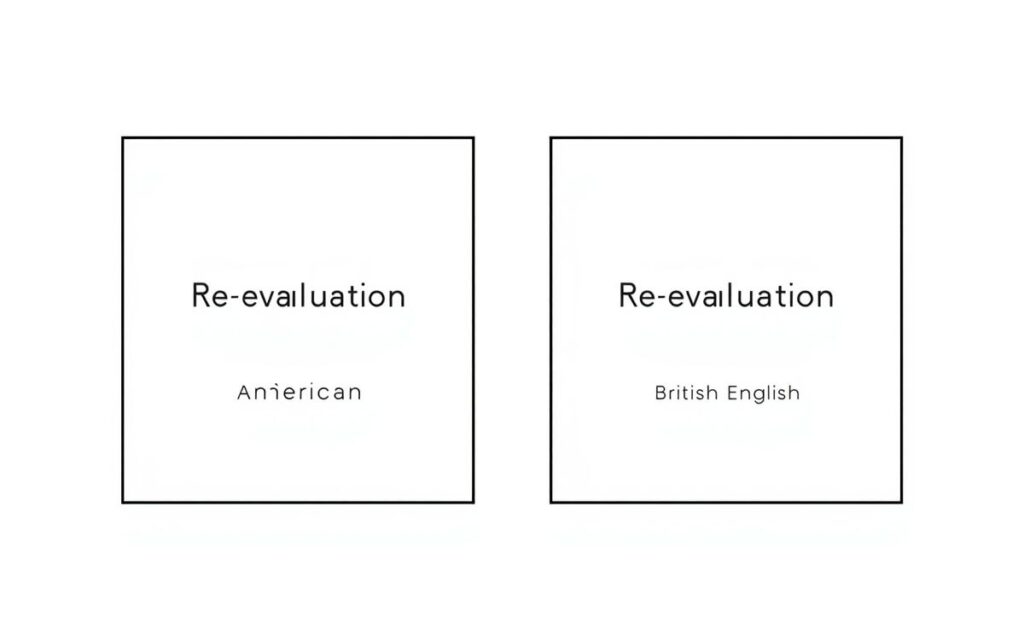
| “Reevaluation” vs “Re-evaluation” | Reevaluation preferred | Re-evaluation standard |
| Authority Sources | Merriam-Webster, AP, Chicago Manual | Oxford English Dictionary, Cambridge |
How Prefixes Work in English: Rules for “Re-”
The prefix “re-” often means to do something again or return to a previous state. Adding it to words can sometimes create confusion, so writers use hyphens to keep meaning clear and avoid mistakes in sentences.
Following prefix rules helps writing stay simple and precise. A hyphen separates the prefix when the word could be misunderstood, like in re-sign or re-cover. Correct usage ensures readers understand the action or idea clearly every time.
General Hyphenation Rules for Prefixes:
- Use a hyphen when the prefix plus the root word could create confusion or a different meaning.
- Skip the hyphen if the word is clear and commonly understood without it.
- Follow dictionary standards or style guides when unsure about hyphen use.
- Some prefixes, like co- or non-, often require a hyphen to maintain clarity and proper meaning.
Common Prefixes and Hyphen Usage
| Prefix | Hyphen Needed? | Example |
| re- | Sometimes | re-cover (to cover again) vs. recover |
| pre- | Rarely | preheat |
| non- | Often | non-negotiable |
| co- | Often | co-founder, co-chair |
| anti- | Often | anti-inflammatory |
| over- | Rarely | overestimate |
The Function of “Re-”: More Than Just ‘Again’
The prefix “re-” does more than show repetition. It can also mean returning to a previous state. Using it correctly with a hyphen prevents confusion, especially in words like re-create or re-elect, where meaning changes without proper punctuation.
Correct re- usage keeps writing clear and professional. A small mark like a hyphen guides readers and avoids misunderstandings. Following these rules improves clarity in school work, reports, and online writing, making sentences precise and easy for everyone to read.
Consider These Examples:
- Re-elect uses a hyphen to show electing again and avoid confusion with other words.
- Recreate means to create again, while re-create uses a hyphen to show a different meaning.
- Resign means to quit, but re-sign with a hyphen means to sign again.
- Using a hyphen in such words helps readers understand the exact meaning and prevents mistakes in writing.
When Should You Hyphenate After “Re-”?
Here’s the golden rule: use a hyphen if the word would be confusing without it or would mean something else entirely.
Use a hyphen if:
- The word could have a different meaning without a hyphen, causing confusion.
- The word starts with a capital letter, like in re-Enter or re-Open.
- You want to avoid misreading the word in sentences or titles.
- Adding a hyphen improves clarity and ensures the reader understands the intended action.
Don’t use a hyphen if:
- The word’s meaning is clear and commonly understood without a hyphen.
- Trusted dictionaries list the word without a hyphen.
- The word is widely accepted in standard writing without punctuation.
- Using a hyphen would make the word look unnatural or clutter the text unnecessarily.
Examples:
| With Hyphen | Without Hyphen | Meaning |
| re-form | reform | Form again vs. improve |
| re-cover | recover | Cover again vs. heal |
| re-sign | resign | Sign again vs. quit job |
| re-evaluate | reevaluate | Evaluate again (both accepted) |
Reevaluation vs. Re-evaluation: Which One is Correct?
Both spellings are technically correct, but their usage depends on context, region, and formality.
American English:
- Reevaluation without a hyphen is the standard spelling in most U.S. writing.
- Style guides like Merriam-Webster and the AP recommend dropping unnecessary hyphens.
- Using the unhyphenated form keeps writing simple, clear, and professional.
- This form works best for SEO and online content, as it is more commonly searched.
British English:
- Re-evaluation with a hyphen is preferred in most UK writing.
- Oxford and Cambridge dictionaries list hyphenated forms as standard.
- Using a hyphen keeps writing clear and formal, especially in academic texts.
- Hyphenation helps prevent confusion when words could have multiple meanings.
What the Style Guides Say
- Merriam-Webster lists “reevaluate” and “reevaluation” without a hyphen for American English.
- Chicago Manual of Style recommends dropping hyphens in common and clear words with “re-.”
- Associated Press (AP) uses a hyphen only when the word could be confusing.
- MLA and APA suggest following dictionary preferences, so “reevaluation” is correct in U.S. writing.
Merriam-Webster:
- Lists reevaluate and reevaluation without a hyphen as standard in American English.
- Encourages using words in their simplest form when the meaning is clear.
- Hyphens are added only if the word could cause confusion without one.
- Following Merriam-Webster ensures writing is accurate, professional, and easy to read.
Chicago Manual of Style:
- Recommends dropping hyphens in common and clear words with the prefix “re-.”
- Focuses on keeping writing simple, readable, and professional.
- Uses a hyphen only when the word could be misunderstood without it.
- Following this guide ensures consistency in formal and academic writing.
Associated Press (AP):
- Uses a hyphen only when the word could cause confusion without it.
- Prefers reevaluate and similar words without a hyphen in most cases.
- Focuses on keeping writing clear, concise, and easy to read.
- Following AP style ensures consistency in news articles, blogs, and professional content.
MLA & APA:
- Suggest following dictionary preferences for spelling words with the prefix “re-.”
- Both styles prefer reevaluation without a hyphen in American English.
- Hyphens are used only when ambiguity could confuse readers.
- Following MLA and APA ensures writing stays accurate, clear, and professional.
What the Data Says: Usage Frequency Over Time
Google Books Ngram Viewer provides a clear visual of how frequently each form is used in published works.
Ngram Trends (U.S. Corpus):
| Year | Reevaluation | Re-evaluation |
| 1980 | 28% | 72% |
| 2000 | 54% | 46% |
| 2020 | 78% | 22% |
Case Study: Legal Document Confusion
A missing hyphen in a legal document caused serious problems. One word could mean two different things, like re-sign versus resign. Correct punctuation in professional writing prevents misunderstandings and saves time, money, and effort in important matters.
Careful hyphen usage ensures clarity in contracts and official papers. Even a small mark can change the meaning of a sentence. Following proper rules protects both writers and readers, making legal and business documents accurate and easy to understand.
Hyphen Usage in Digital Content and SEO
In the online world, word choice affects search engine visibility.
Keyword Trends:
| Term | Monthly Searches (US) | Keyword Difficulty | Preferred for SEO |
| reevaluation | 9,800 | Low |  |
| re-evaluation | 2,400 | Medium |  |
Why “Reevaluation” is Better for SEO:
- Reevaluation is shorter and simpler, making it easier for search engines to read.
- More people search for this term, increasing website traffic and visibility.
- It matches Google autocomplete suggestions, helping content appear in search results.
- Using the standard form improves online readability and boosts digital content performance.
Using Hyphenated Words in Titles: What You Should Know
When writing titles, a hyphen helps show the connection between words. In American writing, many words drop the hyphen, while British style often keeps it. Correct use makes headings clear and easy for readers to understand.
Capitalization also matters in hyphenated words. Both parts of a hyphenated title are usually capitalized if needed. Following these rules keeps writing professional and neat, especially in essays, articles, or online content. Proper formatting improves clarity and looks polished.
| Title Style | Correct? |
| “Re-Evaluation Procedures in 2024” | Yes (British) |
| “Reevaluation Plans You Should Know” | Yes (American) |
| “Re-Evaluation vs Reevaluation” | Yes (if comparing regions) |
| Context | Use “Reevaluation” | Use “Re-evaluation” |
| American English | | |
| British English | | |
| Formal Legal Writing | (with clarity) | (if required) |
| SEO Content | Higher volume | Lower search results |
| Academic Writing (US) | | |
| Style Consistency | | (if consistently applied) |
Best Practices for Using “Reevaluation” and Hyphenated Words
- Use reevaluation for American English unless a style guide says otherwise.
- Use re-evaluation for British English or formal writing to maintain clarity.
- Let context and audience guide whether a hyphen is needed.
- Check trusted dictionaries or style guides to ensure correct spelling and punctuation.
FAQs
Is Re-evaluate One Word or Two?
“Re-evaluate” can be written with a hyphen to prevent confusion, but in modern American English, “reevaluate” as one word is widely accepted and correct.
Does Reevaluate Need a Hyphen?
In American English, reevaluate does not need a hyphen. A hyphen is only required if omitting it could cause misunderstanding or ambiguity.
Is Revaluation One Word or Two?
“Revaluation” is written as one word in both American and British English. It refers to assessing or adjusting the value of something again.
What is the Meaning of Re-evaluation?
Re-evaluation means reviewing or assessing something again to ensure accuracy, improve decisions, or check progress in a formal or professional context.
Final Thoughts
Choosing the correct hyphen in words like reevaluation or re-evaluation improves clarity and makes writing professional. Small punctuation marks help readers understand sentences easily and prevent mistakes in school, work, or online content.
Using proper hyphen usage keeps writing neat and precise. Following style guides and dictionary standards ensures sentences are clear, accurate, and easy for everyone to read, whether in essays, reports, or digital articles.

Grammar made easy with Jasiya – your trusted guide for English grammar rules, writing tips, and clear examples to boost learning, accuracy, and confidence.