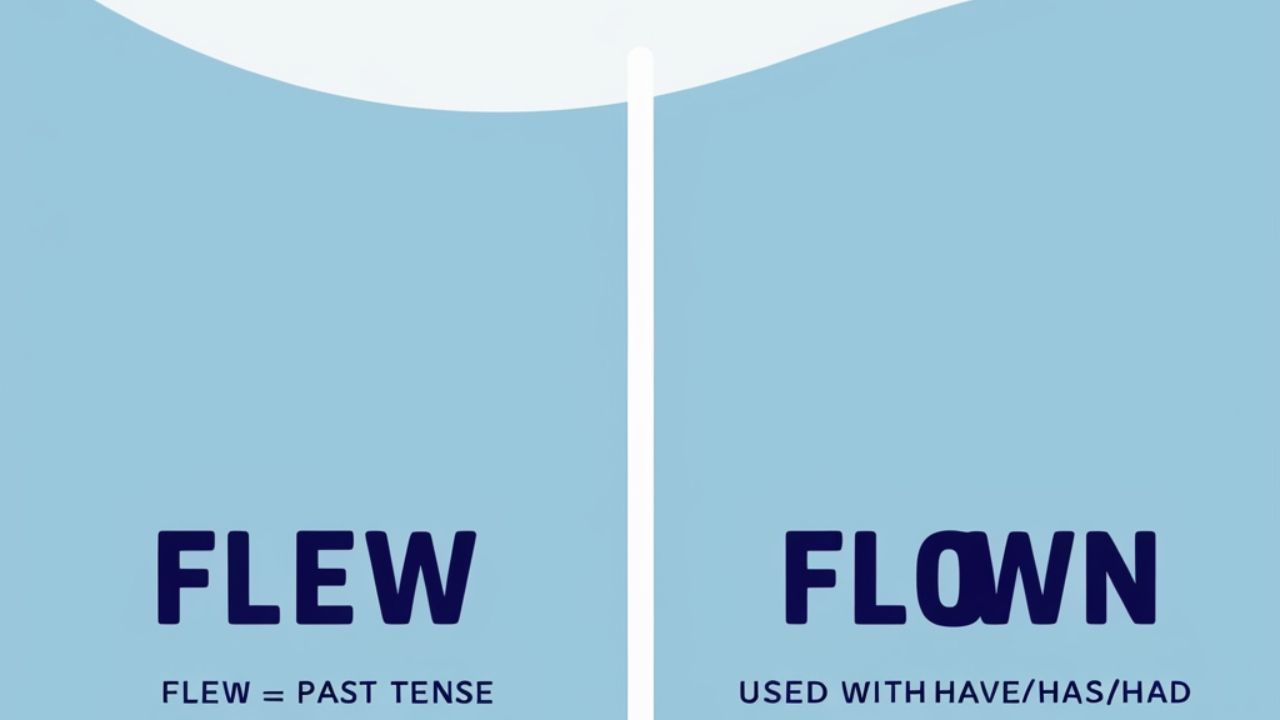
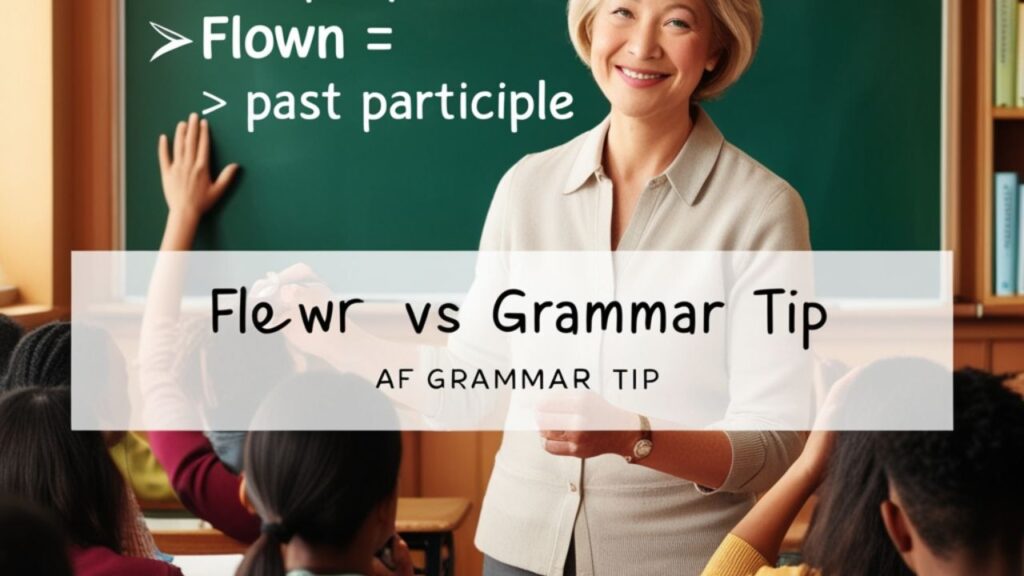
Flew or Flown are two special words that show how the verb fly changes when we talk about time. Flew means something happened before now, like “The bird flew away.” Flown means the action has happened with help from words like has or had.
Learning when to use Flew or Flown helps your English sound correct and confident. Flew is simple and stands alone, while Flown always joins another helper word. With practice, your grammar becomes smoother and your sentences sound more natural every day.
Children can remember Flew or Flown by reading short stories and noticing how people use them. Writing small sentences again and again builds strong memory. Soon, using these words will feel easy, just like speaking with friends at school.
Why “Flew” vs. “Flown” Is Confusing for Many Learners
Many students mix up Flew or Flown because these words change from the main verb fly in special ways. Regular verbs only add -ed, but this one changes form. When learners see both, they forget which one goes with helper words.
To learn Flew or Flown, children must listen, read, and write simple sentences. Practice helps the mind remember patterns. Once they understand that one shows a past action and the other needs a helper word, their English becomes strong and correct.
| Verb Form | Fly |
| Base Form | fly |
| Simple Past | flew |
| Past Participle | flown |
The Verb “Fly”: Structure and Conjugation Table
| Tense | Verb Form | Example |
| Base Form | fly | I love to fly. |
| Simple Past | flew | She flew to New York last week. |
| Past Participle | flown | They have flown across oceans. |
| Present Participle | flying | He is flying to London. |
| 3rd Person Present | flies | She flies every weekend. |
When to Use “Flew” – The Simple Past Tense
Flew is used when describing a completed action in the past that doesn’t rely on another verb.
Use flew when:
- The action happened in the past and stands alone without a helping word.
- The sentence shows a clear time clue like yesterday, last week, or in 2020.
- The event began and ended completely before the moment of speaking.
Incorrect:
❌ I have flew to Paris.
❌ She had flew before the trip.
❌ They have already flew across the country.
Key Context Clues:
If your sentence includes words like yesterday, last year, in 2020, or other past time indicators, it probably needs flew.
Understanding “Flown” – The Past Participle Form
Flown is the past participle form of “fly.” It always works with auxiliary verbs like have, has, had, or will have.
Use flown when:
✅ Use flown with helping words like has, have, or had.
✅ Show an action that finished before another event or time.
✅ Describe experiences or actions connected to the present moment.
See also Is It Correct to Say “First Priority”? Explained Simply
Examples:
I have flown to New York many times.
She has flown across the ocean safely.
They had flown before sunrise that morning.
Incorrect:
❌ They flown to London yesterday.
❌ He has flew across the river.
❌ We had flew before the meeting started.
Side-by-Side Comparison: Flew vs. Flown
| Usage Type | Flew | Flown |
| Tense | Simple Past | Past Participle |
| Used With Auxiliary? |  No No |  Yes (have/has/had) Yes (have/has/had) |
| Example Without Helper | She flew to LA. | Incorrect |
| Example With Helper | Incorrect | She has flown to LA. |
| Trigger Words | Yesterday, Last week | Have, Has, Had, Will have |
| Sentence Style | Direct event in past | Describing result or experience |
What Are Auxiliary Verbs and Why They Matter?
Auxiliary verbs are small helping words like has, have, and had that make other verbs sound complete. They tell us when something happens and how it connects to other actions. Without them, some sentences sound strange or unfinished in English.
Learning auxiliary verbs helps young learners build strong grammar skills. These words work with main verbs to show time, action, and meaning clearly. With daily reading and practice, students use them naturally and make their sentences clear and correct.
| Auxiliary Verb | Example with “Flown” |
| has | She has flown to Rome. |
| have | They have flown many times. |
| had | He had flown before she arrived. |
| will have | You will have flown 10 hours by then. |
Common Grammar Mistakes With “Flew” and “Flown”
Even advanced learners mix these up. Let’s fix that.
Incorrect Phrases:
❌ I have flew across the sea.
❌ She had flew before her lesson.
❌ They have already flew to the island.
Corrected:
✅ I have flown across the sea.
✅ She had flown before her lesson.
✅ They have already flown to the island.
Grammar Tip:
If there’s a have, has, had, or will have – you must use flown.
Fly in Continuous and Perfect Tenses: How It Changes
Sometimes learners confuse “flying” and “flown.” Let’s separate them clearly.
Continuous Tense (Ongoing Action):
I am flying to school right now.
I was flying when the rain started.
I will be flying to another city tomorrow.
Perfect Tense (Completed Action with Link to Present/Past/Future):
I have flown on an airplane before.
She had flown many times before the trip.
We will have flown across the world by next week.
| Tense Type | Example Sentence |
| Present Cont. | I am flying now. |
| Present Perf. | I have flown many times. |
| Past Cont. | I was flying when the call came. |
| Past Perf. | I had flown long before she did. |
| Future Perf. | We will have flown across the globe. |
English Idioms with “Fly,” “Flew,” and “Flown”
English is rich with idioms that use variations of “fly.” While these don’t always follow grammar rules, they’re useful in everyday speech.
Popular Idioms:
Time flew by when we played outside.
She is flying high after winning the prize.
The bird has flown the coop and won’t return soon.
Real-World Usage: Mini Case Study
A small writing mistake can change how a sentence sounds in daily life. In a real story, a student wrote Flew or Flown the wrong way on his homework. His teacher explained the correct form kindly, and he understood how these verbs work together.
Using Flew or Flown correctly shows care and good learning habits. Real examples from school, travel, or stories help students remember better. When they see the right words in action, they start to speak and write more confidently every day.
See also Leotard vs Tights: Key Differences Every Dancer Should Know
Correction:
When fixing a sentence with Flew or Flown, we change the word to match the helping verb. For example, I have flown to London is right, not I have flew. Small corrections make writing neat and easy to understand.
Learning how to correct Flew or Flown builds confidence. Students see how grammar rules guide them to the right form. With steady practice, they remember which word fits and write beautiful sentences that sound natural and clear.
Tips to Master Irregular Verbs Like “Fly”
Repetition and Practice:
Write short sentences using flew and flown every day.
Say the sentences aloud to build strong memory.
Play fun grammar games to test how well you remember the words.
Read and Listen:
Read short stories and mark each time you see Flew or Flown.
Listen to songs or cartoons that use these words in sentences.
Repeat the lines you hear aloud so your memory grows stronger each day.
Identify Patterns:
| Base | Past Simple | Past Participle |
| go | went | gone |
| eat | ate | eaten |
| fly | flew | flown |
Recap Table: Everything You Need to Know

| Form | Usage | Example |
| Flew | Simple Past (no helper verb) | She flew yesterday. |
| Flown | Past Participle (with have/has/had) | She has flown before. |
| Flying | Continuous Tense | She is flying now. |
Conclusion
Learning Flew or Flown helps young students use English correctly. When they know which word fits in each sentence, their writing becomes smooth and clear. Good practice and reading help them understand grammar without feeling nervous or confused.
Using Flew or Flown the right way makes every sentence sound smart and correct. Children can remember easily through simple stories and short lessons. With time and effort, they build strong language skills and speak with confidence in every situation.
FAQs
Is it flown or flew a plane?
Use “flew a plane” for past tense and “has flown a plane” for present perfect tense.
Is it flown by or flew by?
“Flew by” describes something passing quickly; “flown by” is used with “has” or “have.”
When to use flown or flew?
Use “flew” for simple past and “flown” with “have,” “has,” or “had.”
Is it flew away or flown away?
“Flew away” is past tense; “has flown away” is present perfect tense.

Join Bibcia on a journey to master English grammar. Discover easy lessons, writing tips, and practical examples designed to make learning grammar simple and effective.