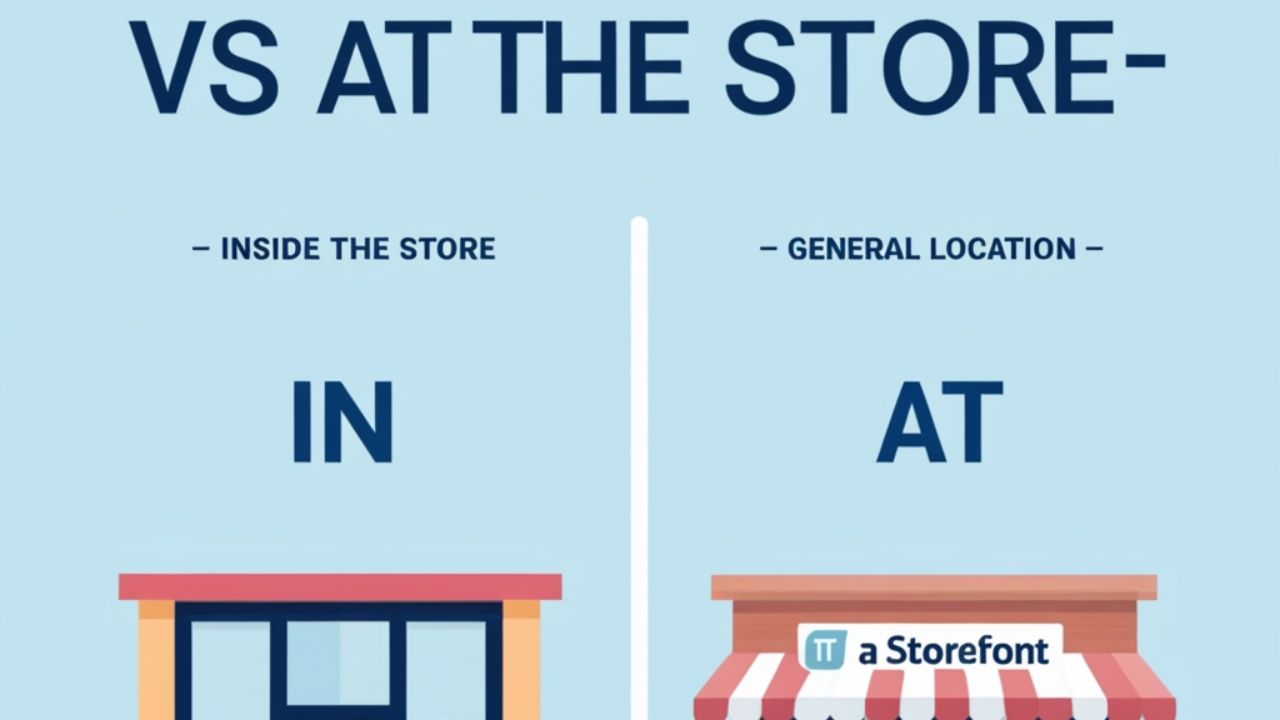
When we say in the store, it means a person is inside the shop. The person can see shelves, goods, and workers. It shows that someone is inside the building, not outside near the door or parking place.
When we say at the store, it tells that a person is near or around the shop. The person can be outside, waiting, or coming to buy something. It points to the shop area, not the inside part.
Both phrases sound close, but they show different meanings. In the store shows being inside, and at the store shows being near. Learning these small changes helps in using English clearly and speaking with confidence.
The Core Difference Between “In the Store” and “At the Store”
The phrase in the store means a person is inside the shop, walking through the aisles or buying things. It shows the person’s place is within the building, surrounded by shelves and items for sale.
The phrase at the store means being near or around the shop, not necessarily inside. It can mean standing outside, parking the car, or just arriving. The small change in words helps people describe their exact location.
- In the store means a person is inside the shop, among shelves or aisles.
- At the store means being near or around the shop, not always inside.
- The two phrases show different levels of location — inside versus general area.
Grammar Mechanics: How “In” and “At” Work
| Preposition | Spatial Meaning | Conceptual/Location Meaning |
| In | Inside: “I’m in the store.” | Enclosed spaces: in the box, in the city |
| At | General point: “I’m at the store.” | Points in space: at the door, at 5 pm |
Usage in Different Contexts
Physical Location vs. Activity
- In the store shows the physical location — the person is inside the shop doing something.
- At the store points to the activity or event happening near the shop.
- The first focuses on where someone is, the second on what they’re doing there.
See also Creek vs Crick: Understanding the Real Difference
Focus on Action vs. Place
- In the store highlights the action happening inside, like buying or looking at things.
- At the store centers on the place itself, not what’s being done there.
- One stresses doing something, while the other shows being somewhere.
Subtle Shifts in Meaning From Prepositions

- Small words like in and at can change the sense of a sentence.
- In the store shows being inside doing something.
- At the store shows a general location, not focusing on the inside action.
Common Mistakes and How to Avoid Them
- Many learners use in the store even when they are outside the shop.
- Some say at the store while shopping inside, which sounds unclear.
- To avoid mistakes, think if you’re inside or nearby before choosing the right phrase.
Real-World Examples in Conversation
- A person says, “I’m at the store”, when standing outside or waiting in the parking area.
- Another says, “I’m in the store”, while walking through aisles or buying goods.
- Using each phrase correctly helps others understand your exact location.
Regional and Dialectal Differences
American vs. British English
- In American English, people say at the store more often in daily talk.
- In British English, in the shop is common when someone is inside buying things.
Urban vs. Rural Speech
In casual conversation – particularly in small towns – you’ll hear both used, but emphasis shifts based on what the speaker wants to focus on.
Google Ngram Analysis
- Data from Google Ngram shows at the store appears more often in books and writing.
- In the store became popular later but remains slightly less common.
- The steady use of at the store shows its broader meaning and flexibility in English.
See also As per Your Request: Meaning, Usage & Best Alternatives
Analogous Preposition Pairs
| Pair | Use of “In” | Use of “At” |
| In/At school | Inside the building/classroom | on campus/in the general vicinity |
| In/At the office | physically inside the office space | part of the workplace/company location |
| In/At the hospital | admitted as a patient | present on premises, visiting, or working |
Workplace Prepositions: “Work In” vs “Work At”
- Work in refers to a field or area, like “work in education” or “work in marketing.”
- Work at points to a specific place or company, such as “work at Google.”
- Using each correctly shows both your role and workplace clearly.
Tips to Speak With Precision
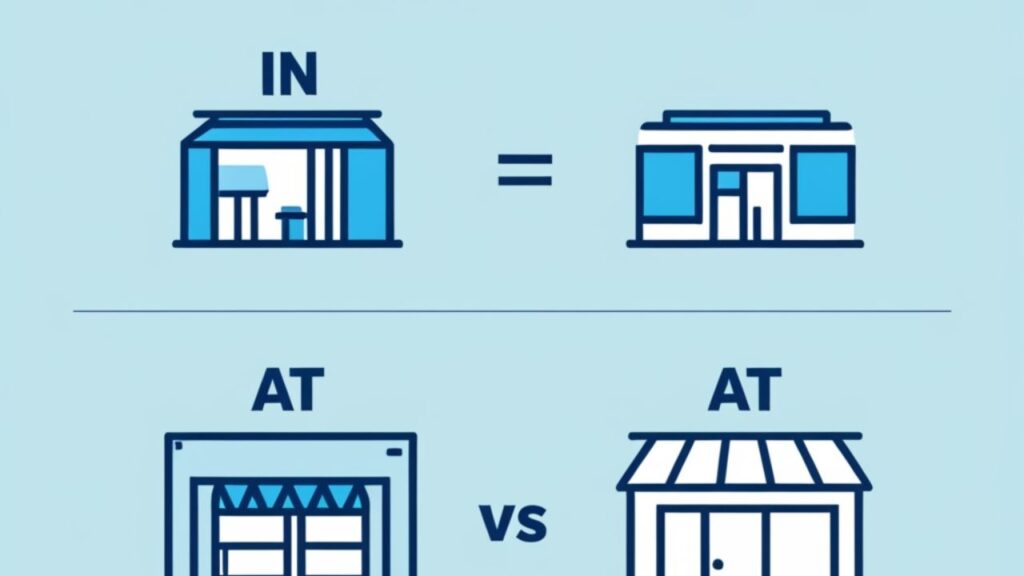
- Choose in when you’re inside a place, and at when you mean a location in general.
- Listen to how native speakers use these phrases in daily talk.
- Practice short sentences often to build clear and confident English speaking habits.
Conclusion: Preposition Mastery Is Context + Intent
| Scenario | Use “In” | Use “At” |
| You’re shopping inside |  In the store In the store | |
| You’re waiting at the entrance. | At the store | |
| Describing a general meetup location | At the store | |
| Discussing what’s happening inside | In the store, they’re stacking shelves. |
- Understanding in and at helps people speak and write with clarity.
- Each preposition changes meaning based on where or how it’s used.
- Clear communication grows when learners match context and intent in every sentence.
Conclusion:
Learning the difference between in the store and at the store helps you talk clearly. These small words show where someone is and what they are doing. Using them correctly makes your English sound natural and easy to understand.
Good English comes from practice and attention. When you speak or write, think about your meaning. Choose the right preposition to match your idea. With time and care, your grammar will become stronger and more confident.
FAQs
Do you say “in the store” or “at the store”
Both are correct. “In the store” means inside the building, while “at the store” means at the general location.
Are you at the store or in the store
Both work. “At the store” means nearby or shopping, while “in the store” means physically inside the store building.
Which one is correct, in the store or at the store
Both are correct depending on context — use “in” for being inside, and “at” for referring to the location generally.
Is it work in or at a store
You usually say “work at a store” when referring to employment, though “work in a store” is also acceptable and emphasizes being inside.

Join Bibcia on a journey to master English grammar. Discover easy lessons, writing tips, and practical examples designed to make learning grammar simple and effective.