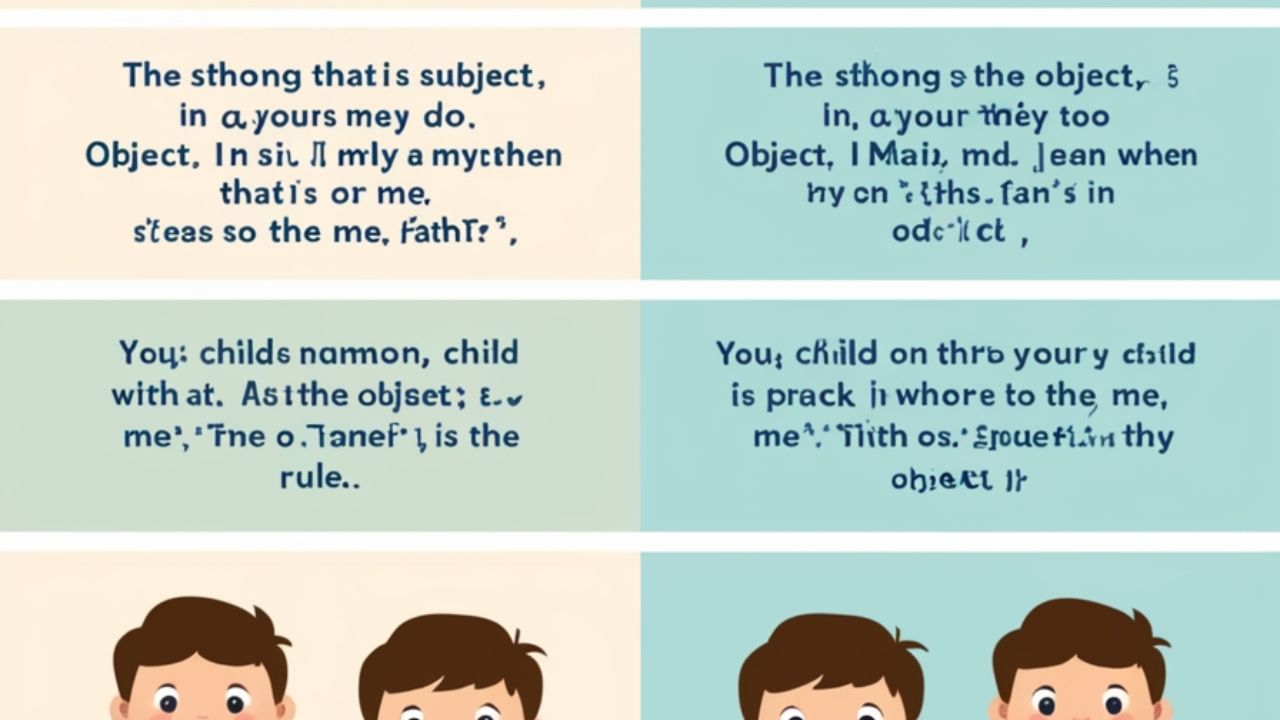
Using I or me correctly can be tricky, but it becomes simple with practice. Always check if the phrase is the subject performing the action or the object receiving it. This helps your sentences sound clear, polite, and professional.
A useful trick is to remove the other person from the sentence. If the sentence still makes sense with I, then it is correct. If me fits better, use it as the object. This method works every time and avoids confusion in writing.
Many people overuse I to sound formal, but it can cause mistakes. Remember, placing others first, like your father, shows respect. Clear grammar builds confidence and helps communication in school, emails, and everyday conversation.
Why This Common Grammar Mistake Still Trips People Up
Many people mix up I and me because they learned the rule but did not practice it with others in sentences. Adding another person, like your father, makes it harder. Clear understanding of subjects and objects avoids this common grammar mistake.
Overcorrecting causes confusion. People often use I everywhere to sound proper, even when it is wrong. Knowing when to place yourself first or second and checking the sentence carefully helps make writing and speaking correct and confident every time.
The Core Grammar Rule: Subject vs. Object Pronouns
Understanding subject and object pronouns is key to writing correctly. I and we do the action, while me and us receive it. Knowing the difference makes sentences clear, polite, and easy to understand in both speaking and writing.
A simple way to check is to remove the other person from the sentence. If I fits alone, the pronoun is the subject. If me fits, it is the object. This rule helps avoid mistakes and improves confidence in grammar every day.
| Pronoun Type | Examples | Function |
| Subject | I, he, she, we, they | Performs the action |
| Object | me, him, her, us, them | Receives the action |
Why “My Father and I” Is Sometimes Right

Use “My father and I” when the phrase is the subject of the sentence. That means it’s the one doing the action.
Examples:
- My father and I built a treehouse.
- The teacher gave a gift to my father and me.
- My father and I will meet you at the park.
Testing Tip:
- Remove “my father” and check if I or me works alone.
- If the sentence makes sense with I, use it as the subject.
- If the sentence makes sense with me, use it as the object.
When “My Father and Me” Is Actually Correct
Use “My father and me” when the phrase is the object of the sentence. That means it’s receiving the action.
Examples:
- The teacher called my father and me to the office.
- She gave my father and me a tour of the school.
- They invited my father and me to the ceremony.
Testing Tip:
- Remove “my father” to see if the sentence still makes sense.
- If it sounds correct with me alone, use it as the object.
- If it sounds correct with I alone, use it as the subject.
Common Grammar Mistakes and Why They Happen
Let’s face it – many of us were taught in school that “me” is wrong, and “I” is always right. That’s just not true. This misconception leads to hypercorrection, where people use “I” even when “me” is correct.
What’s Hypercorrection?
Hypercorrection is when someone over-applies a grammar rule and ends up being wrong.
Example: ❌ “She gave the keys to my father and I.” ✅ “She gave the keys to my father and me.”
See also A Hilarious or An Hilarious? Grammar Rule Explained
Why It Happens:
- People want to sound formal or educated.
- Grammar rules are often simplified in school.
- I sounds more proper, even when it is not correct.
Is “Me and My Father” Ever Correct?
Yes, technically it can be correct when used as an object. But many style guides recommend putting the other person first.
Examples Where It’s Technically Okay:
- She handed the books to me and my father.
- They thanked me and my father for helping.
- The teacher invited me and my father to the event.
Why Order Matters:
English etiquette prefers putting others before yourself. “My father and me” sounds more respectful than “Me and my father.”
How to Choose Between “I” and “Me”: Memory Aids
Here are practical tricks to help you get it right every time:
Drop-the-other-person Test
- Remove the other person’s name to check the pronoun.
- If I fits alone, the phrase is the subject.
- If me fits alone, the phrase is the object.
Visual Mnemonic Table
| Sentence Role | Use This | Example |
| Subject (doer) | My father and I | My father and I are leaving now. |
| Object (receiver) | My father and me | She texted my father and me. |
Where These Grammar Rules Really Matter
While most people won’t call you out in casual speech, in formal situations, correct grammar leaves a strong impression.
Situations Where It Counts:
Correct grammar matters most in formal situations. Using the right pronouns shows professionalism and clarity. Job interviews, school essays, and official emails all benefit from careful language. Clear writing makes a strong impression and helps others understand your ideas easily.
Public speaking and business writing also require attention to subject and object pronouns. Using them correctly avoids confusion and builds trust. Simple habits, like checking sentences and placing others first, improve communication and make your speech and writing appear polished and confident every time.
- Job interviews and professional meetings.
- College applications and official essays.
- Emails, public speaking, and business writing.
Grammar in Pop Culture: Misused But Accepted?

Songs, TV shows, and movies often use incorrect grammar – sometimes intentionally.
Examples in Pop Culture:
- Songs often say “Me and my dad” in lyrics.
- TV shows use “Me and my father did that” for comedy.
- Movies show incorrect grammar in dialogue to reflect character style.
Should You Imitate This?
Not in formal writing. But in fiction or dialogue? Possibly – if it suits the character.
See also By Which or In Which: Grammar Rules & Easy Examples
Interactive Practice: Test Yourself
- My father and ___ are going shopping.
- The letter was sent to my father and ___.
- ___ and my father enjoy hiking.
Do’s and Don’ts: Quick Grammar Table
| Do | Don’t |
| Say “My father and I went to the concert.” | ❌ Say “Me and my father went to the concert.” |
| Say “They saw my father and me at the event.” | ❌ Say “They saw my father and I at the event.” |
| Use the drop-test to verify correctness | ❌ Assume “I” is always the more correct choice |
| Put others before yourself in phrasing | ❌ Put “me” before the other person in formal talk |
| Use “me” confidently when it’s the object | ❌ Avoid “me” just to sound more proper |
Summary Recap: Grammar You Can Actually Use
- Use My father and I when the phrase is the subject.
- Use My father and me when the phrase is the object.
- Apply the drop-test to check which pronoun fits correctly.
Final Thoughts
Understanding the difference between I and me makes writing and speaking clear. Using the correct pronoun helps sentences sound natural and professional. Simple rules, like checking the sentence without the other person, make it easy to get it right every time.
Avoid overcorrecting by always thinking about the sentence role. Placing others first and using subject and object pronouns carefully shows respect and builds confidence. These small habits improve communication in school, work, and daily life, making your language both polite and accurate.
FAQs
Is it correct to say I and my father?
Use “my father and I” for subjects and “my father and me” for objects; avoid starting with I.
Which is correct, David and I or David and Me?
Use David and I when acting as the subject; use David and me when the phrase receives the action.
Which is correct, me and my wife or I and my wife?
Correct forms are my wife and I as subjects and my wife and me as objects; avoid beginning with me or I.
Is it correct to say dad and I or dad and me?
Use Dad and I for subjects and Dad and me for objects; both are correct depending on sentence role.

Join Bibcia on a journey to master English grammar. Discover easy lessons, writing tips, and practical examples designed to make learning grammar simple and effective.