Sometimes people fall behind and need extra time to finish work or learn something new. This is called playing catch up. It means trying to reach the same level as others by working harder and staying focused until everything feels balanced again.
The phrase playing catch up started long ago in sports when one team tried to score and match another team’s points. Later, people began using it for school, jobs, and life when they needed to fix delays or missed tasks quickly.
In daily life, everyone experiences moments of playing catch up. A student might study more after being sick. A worker might finish late reports. It teaches patience, effort, and the value of steady progress toward reaching goals.
Understanding the Idiom “Playing Catch Up”
- Playing catch up means working hard to reach the same point as others after falling behind in tasks or goals.
- The phrase shows action, focus, and the desire to fix delays or missed work.
- It is often used in schools, jobs, and games when someone needs extra effort to succeed.
- The idiom teaches that progress takes patience, planning, and steady improvement.
- It helps people stay motivated and reminds them that small, consistent steps lead to success.
The Origins of “Playing Catch Up”
The phrase playing catch up came from sports many years ago. It showed how one team tried to reach another team’s score. Over time, people started using it in school, work, and daily life to show effort and determination.
In the 1950s, workers and athletes used playing catch up to describe closing a gap or fixing delays. It became common in offices, homes, and classrooms. The phrase reminds everyone that progress comes from steady action and strong focus.
| Decade | Context | Example Usage |
| 1950s | Sports jargon | “He caught up with the base round!” |
| 1960s | Workplace lingo | “We’re playing catch up on production.” |
| 1970s–90s | Corporate speak | Becomes part of meeting jargon |
The Phrase in American English: Cultural Relevance
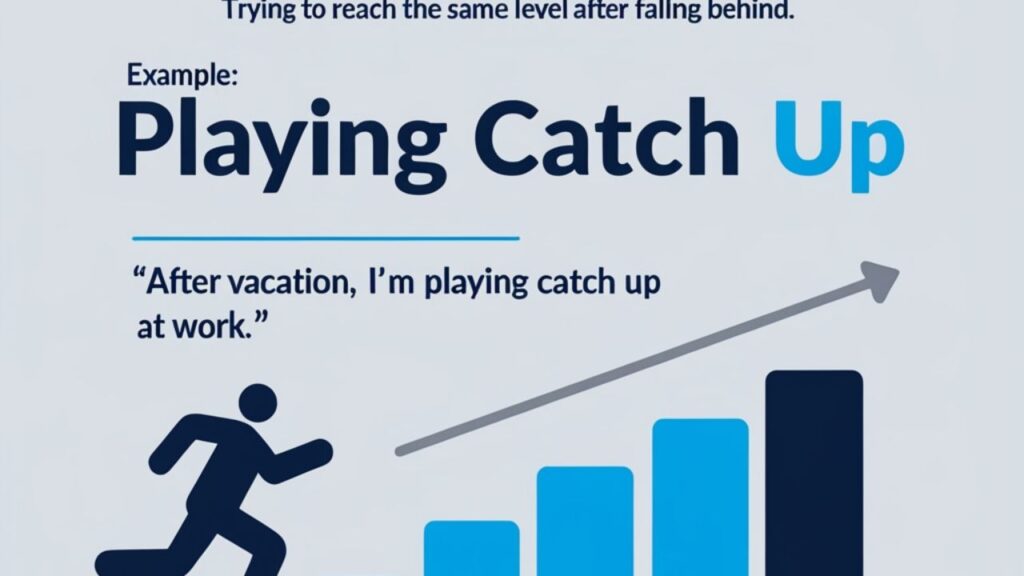
In American culture, playing catch up shows action and drive. People use it to describe moments when they work hard to reach goals or finish late tasks. It fits daily life, work, and sports where effort and focus matter most.
The phrase playing catch up also shows determination in American English. It tells others that someone is moving forward with strength and energy. In offices, schools, or homes, it reminds people that staying consistent brings steady progress.
- In American English, playing catch up reflects effort, energy, and the drive to achieve goals.
- It is used often in workplaces, schools, and homes to show active progress or recovery.
- The phrase highlights determination and the value of staying consistent even under pressure.
- Americans use it to express motivation, teamwork, and readiness to meet challenges.
- It symbolizes a positive attitude—focusing on growth and improvement rather than failure.
Literal vs Figurative Use of “Playing Catch Up”
Describes actual movement, like a student sprinting to catch up with classmates or a jogger chasing someone ahead.
Literal Usage
- The term playing catch up describes a real action, like someone running to reach another person ahead.
- It often appears in sports or games where one player tries to close the distance.
- The phrase shows movement, energy, and quick effort to match speed or progress.
- It teaches focus and determination when working to reach a clear goal.
- In simple words, it means physically trying to keep up with someone or something moving forward.
See also Born in or Born on: Grammar Rule Explained Clearly
Figurative Usage
- The idiom playing catch up means working to fix delays or reach goals after falling behind.
- It shows effort and determination to complete unfinished work or regain balance.
- People use it when managing tasks, studies, or personal growth.
- It teaches focus, planning, and consistency in daily life.
- The phrase encourages steady progress and a positive attitude toward challenges.
Playing Catch Up in Sports and Athletics
In games and races, playing catch up means trying to close the gap between players or teams. Athletes push themselves harder to reach the same score or speed. It shows teamwork, strength, and the will to finish strong until the final moment.
In sports, playing catch up helps build focus and courage. When teams fall behind, they learn patience and planning. Coaches guide them to stay calm and use smart moves to turn pressure into a chance for success.
- In sports, playing catch up means trying to match or pass another team’s score.
- It shows determination, focus, and teamwork during tough moments in a game.
- Athletes train harder and use smart strategies to close the gap.
- Coaches guide players to stay calm, confident, and ready to push forward.
- The phrase reminds everyone that strong effort and belief can turn a loss into victory.
Playing Catch Up in Competitive Contexts
In Business
- In business, playing catch up means working fast to match stronger competitors or market leaders.
- Companies improve products, services, or technology to close the performance gap.
- It shows commitment to growth, learning, and innovation in a changing market.
- Leaders often use new ideas, smart planning, and teamwork to move ahead.
- The phrase reflects progress, showing how firms adapt to stay successful and relevant.
In Economics
Countries sometimes play catch up by investing heavily in infrastructure or education – closing development gaps over decades.
In Academics
A student returning from sick leave may need to play catch up in classes – and understanding the pressure involved matters.
The Business of Catching Up: Strategic Implications
| Strategy | Pros | Cons |
| Fast Follower | Lower risk, industry-tested ideas | Risk of falling into follower trap |
| Innovator | Potential market leadership, high margins | High investment, risk of failure |
- In business strategy, playing catch up means using smart methods to reach top competitors.
- Companies invest in new tools, research, and skills to strengthen performance.
- It encourages innovation and faster decision-making to stay ahead in the market.
- Businesses learn to balance quick results with long-term stability and growth.
- The phrase highlights how planning, focus, and adaptability lead to lasting success.
Everyday Situations of “Playing Catch Up”
- In daily life, playing catch up happens when people finish tasks they missed earlier.
- Students study extra lessons, and workers complete reports or projects on time.
- Parents manage chores, errands, or messages after busy days.
- It shows responsibility, patience, and the will to stay organized.
- The phrase reminds everyone that steady effort helps regain balance and confidence.
Common Examples & Sentences Using “Playing Catch Up”
People often use playing catch up in school, work, and home life. A student may study extra lessons after being sick. A worker may complete missed reports. It means doing extra effort to reach the same level as others.
In simple talks, playing catch up fits many situations. You might hear someone say they are catching up on sleep, cleaning, or emails. These examples show dedication and the wish to stay organized and balanced in daily tasks.
| Context | Good Use | Awkward Use |
| “Playing catch up on deliverables.” | “OMG, I’m catching up on like 100 things.” | |
| Meeting | “We need to play catch up strategically.” | “We’re playing catch up and it’s chaos!” |
| Friend chat | “Just playing catch up on chores.” | “Playing catch up and totally overwhelmed.” |
Psychological Impact & Productivity Traps
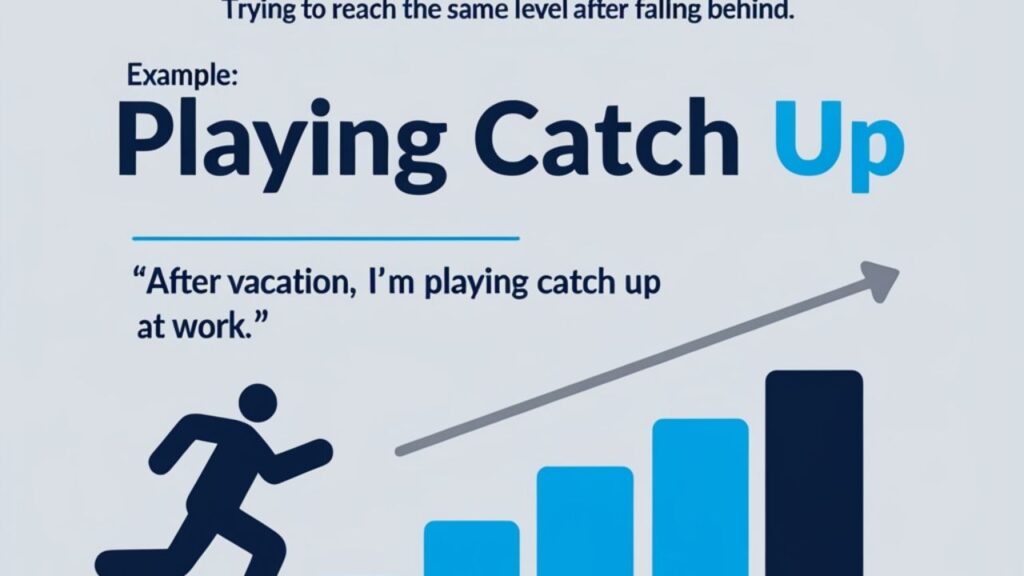
- Constantly playing catch up can create stress and mental tiredness over time.
- People may feel guilty or anxious when tasks pile up too often.
- It can reduce focus, leading to rushed work and lower productivity.
- Taking breaks, planning ahead, and setting priorities help avoid these traps.
- The phrase reminds us to stay calm, work wisely, and value steady progress.
See also In Which vs Where: Key Grammar Rules Explained Clearly
Conclusion
The phrase playing catch up teaches the importance of steady effort and focus. It reminds people that success takes time and patience. Working carefully each day helps build confidence and keeps goals within reach even after falling behind.
In life, everyone faces moments of playing catch up. What matters most is the courage to continue and learn from each delay. With calm action and planning, progress becomes easier, and every small step brings lasting improvement.
FAQs
What does it mean playing catch up?
It means trying to reach the same level or progress as others after falling behind.
What does catch up mean in slang?
It means meeting or reconnecting with someone to talk or update each other.
What does lets catch up mean in slang?
It means “let’s meet soon and talk about what’s new.”
What’s another way to say “playing catch up”?
You can say “making up for lost time” or “trying to get back on track.”

Join Bibcia on a journey to master English grammar. Discover easy lessons, writing tips, and practical examples designed to make learning grammar simple and effective.