In which helps to show a strong and clear link between ideas. It often appears in books, reports, and school lessons. Writers use it when they want to sound careful and exact in their meaning.
Where is a simple word that talks about a place or a situation. It feels natural in daily speech and stories. People use it to make their writing easy to read and friendly to understand.
Both phrases bring clarity to sentences. Choosing the right one makes writing neat and strong. Learning how to use them correctly helps students write with confidence and express their ideas with grace.
Exploring the Basics of “In Which” and “Where”
In which shows a close link between ideas in a sentence. It helps writers sound neat and careful. People use it in school writing or books when they want their meaning to be clear and easy to follow.
Where tells about a place or a situation. It sounds natural and friendly. Children use it when they talk or write simple stories. Knowing how both words work helps young learners write better and share their thoughts clearly.
- In which shows a clear and formal link between ideas or objects. It helps sentences sound neat, proper, and easy to understand, especially in school writing or reports.
- Where points to a place or situation. It feels simple and natural in speech, making stories and everyday writing friendly and clear.
- Both phrases bring clarity to writing. Choosing the right one helps students express their thoughts correctly and build strong grammar habits.
Dissecting the Definitions: ‘Where’, ‘In Which’, and ‘Wherein’
Where talks about a place or time in a simple way. It helps show where something happens. Children can use it when they describe stories, places, or events that are easy to understand.
In which adds detail and makes writing sound proper. Wherein looks formal and often appears in old books or legal writing. Knowing these words helps young learners see how English changes in meaning and tone.
The Function of ‘Where’ in Sentences
Where helps describe a place or a point in time. It shows where something happens or exists. Writers use it to make stories clear and simple for readers to follow and enjoy learning through examples.
This small word adds movement and meaning to ideas. Where connects people, actions, and locations smoothly. Children understand it easily because it sounds natural in speech and helps them express thoughts with order and confidence.
- Where shows the place or time something happens. It makes sentences clear and helps readers know the setting of an action or idea.
- It links actions, people, or things to locations smoothly. Writers use it to keep sentences simple and meaningful.
- Using where helps students write naturally. It builds a clear picture for readers and keeps their writing neat and easy to follow.
See also Prescribe vs Proscribe: Know the Real Difference
How ‘In Which’ Enhances Clarity
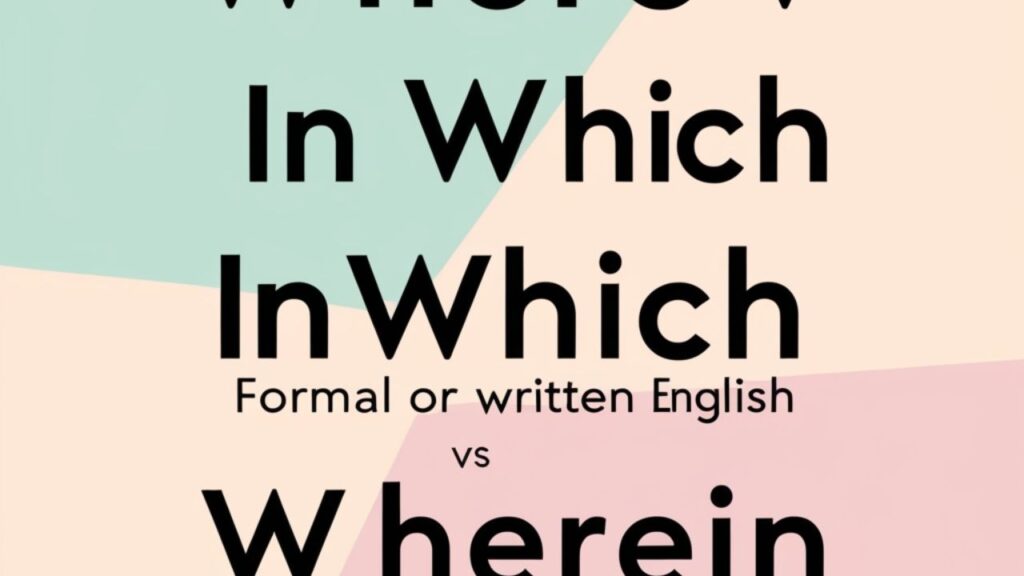
In which helps to make writing neat and clear. It shows a strong link between ideas and objects. Students use it when they want their sentences to sound proper and easy to understand in school work or reports.
This phrase adds meaning without confusion. In which fits well in lessons, essays, and books. It guides readers to know what belongs to what, making writing smooth, correct, and full of sense for young learners.
- In which helps writers make sentences clear and well-organized. It joins ideas smoothly and gives structure to writing.
- It works best in school work, reports, and essays where precision is important. Readers can easily follow the meaning.
- Using in which teaches students to express thoughts neatly. It builds good grammar habits and keeps writing formal and correct.
Understanding the Rarity of ‘Wherein’
Wherein sounds old and formal. It appears mostly in legal or historical books. Writers use it when they want their sentences to sound serious. Young learners can remember it as a word that belongs to very formal or special kinds of writing.
This word adds depth but is not common today. Wherein helps describe a rule or condition inside something. Modern writers prefer simpler forms, yet learning about it teaches children how English has changed over time.
- Wherein is an old and formal word mostly used in legal or historical writing. It helps explain details clearly in serious documents.
- Modern writers rarely use it because simpler words fit better in everyday language and school writing.
- Learning wherein helps students understand how English changes over time and why some words sound formal or traditional.
When to Use ‘Where’ Over ‘In Which’
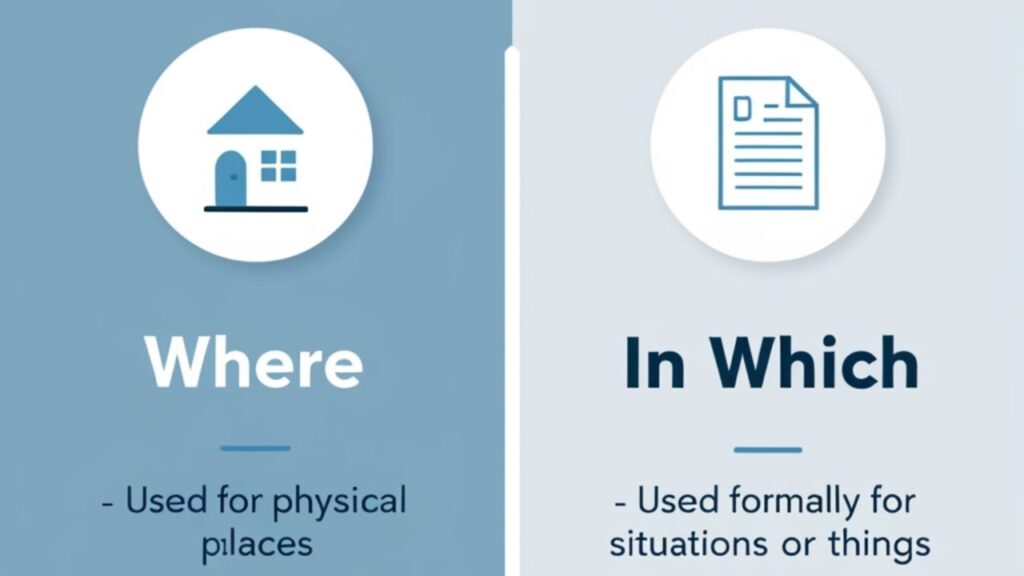
- Where fits well in simple or everyday sentences. It helps describe a place or stage clearly without sounding too formal.
- Writers use it when the sentence feels natural and easy to read. It keeps communication smooth and friendly.
- Choosing where instead of formal phrases makes writing light and clear, helping young learners express ideas comfortably.
Illustrating ‘In Which’ in Formal Writing
- In which is useful in formal writing like essays, reports, or research papers. It helps connect ideas clearly and keeps sentences organized.
- It shows careful thinking and makes the meaning exact, which is important in academic or technical work.
- Using in which helps students write properly and develop a polished writing style that sounds respectful and professional.
Parsing Examples: From Legal Documents to Literary Works
| Register | Example with ‘where’ | Example with ‘in which’ |
| Legal contract | “The party where the contract fails…” | “The party in which the contract fails…” (clearer obligations) |
| Academic writing | “A scenario where variables interact unpredictably.” | “A scenario in which variables interact unpredictably.” (precise) |
| Literary novel | “The town where heroes fear to tread.” | “A world in which heroes fear to tread.” (more poetic/formal) |
Sifting Through Everyday Usage and Special Cases
- Where appears often in daily speech and simple writing because it sounds natural and easy to use. It helps ideas flow smoothly in stories or conversations.
- In which suits special cases where sentences need more detail or formal tone, such as reports or school work.
- Learning when to use each phrase helps students write correctly, keeping their sentences clear, balanced, and meaningful.
Analyzing How Context Influences Choice
Context helps decide which word fits best in a sentence. It means the situation or topic around the words. Writers think about who will read their work and what tone feels right before choosing how to write clearly.
Good understanding of context helps students use language wisely. In stories or lessons, they can pick words that sound natural and make sense. This skill builds confidence and helps young learners write with meaning and balance.
- Context guides writers in choosing the right words for each sentence. It depends on who reads the writing and what message needs to be shared.
- Formal writing requires clear and careful words, while friendly writing allows simpler expressions that sound natural.
- Understanding context helps students build better sentences, making their ideas fit perfectly with the topic and audience.
See also Prescribe vs Proscribe: Know the Real Difference
The Place of ‘Wherein’ in Legal and Historical Texts
Wherein appears in formal documents, old writings, and records. It helps describe laws, agreements, and traditions clearly. Writers use it when they explain rules or events that happened long ago in a proper and detailed manner.
This old-style word gives a serious tone to writing. Wherein links actions and conditions inside a statement. It helps readers understand exact meanings in legal or historical contexts, making each line sound strong and well-structured.
- Wherein often appears in legal papers and old writings to explain detailed rules or conditions clearly. It gives sentences a strong and serious tone.
- The word helps describe actions or agreements that happen inside a specific situation or document.
- Knowing wherein teaches students about formal language and how it adds depth to legal or historical expressions.
Modern Usage: How Language Evolving Shapes Your Choice
- Language evolving means the way people’s speaking and writing styles change with time. New words appear, and old ones fade from common use.
- Writers today prefer simple and clear expressions that sound natural to modern readers.
- Understanding language evolving helps students choose words wisely, keeping their writing fresh, correct, and easy to read.
Common Mistakes and Misconceptions
- Many students mix up where and in which when writing, using them in the wrong places and losing sentence clarity.
- Some think wherein fits in normal speech, but it sounds too formal for everyday writing or talking.
- Understanding these mistakes helps learners write correctly, keeping their sentences clear, natural, and easy to follow.
Practical Exercises for Mastery
- Simple fill-in-the-blank tasks help students practice using where, in which, and wherein correctly in sentences.
- Rewriting short examples trains learners to choose words that sound clear and proper for each situation.
- Regular practice builds confidence, helping students remember grammar rules and use them naturally in their writing.
Visual Guide: Comparing Perspectives
| Register | Comprised Phrase | Everyday | Technical/Formal | Literary & Historical |
| Informal writing | where |  |  Too loose Too loose | May sound slangy |
| Formal/academic writing | in which | Too stiff | Accurate | Reliable |
| Legal/historic writing | wherein |  Too archaic Too archaic | Too dense | Contextual clarity |
Language Evolution: What’s Changing in Usage
Language evolution means how words and grammar slowly change over time. People speak in new ways, write faster, and use simpler forms. This makes learning English exciting because it grows with each new generation and their style of expression.
Modern writing shows how language evolution brings freshness. Old words fade while new ones appear. Students learn that change is natural and helpful. It keeps reading and writing lively, making communication easier and more connected to daily life.
- Language evolution shows how people change the way they speak and write over time, making English simpler and easier to use.
- Modern writers often choose short, clear phrases instead of older or complex expressions.
- Understanding language evolution helps students see how words grow and adapt, keeping communication lively and meaningful.
Final Thoughts
Conclusion brings all the ideas together in a clear way. It helps readers remember the main points about grammar and word use. Children learn that choosing the right words makes writing stronger and helps thoughts sound neat and easy.
A good conclusion leaves a complete picture in the reader’s mind. It reminds them how learning small grammar rules improves speaking and writing. This ending gives confidence to young learners and helps them express ideas with care and clarity.
FAQs: Clearing Common Doubts
How to use where and in which?
Use “where” for places; “in which” for formal writing or non-physical contexts like situations or documents.
Where vs in which vs wherein?
“Where” is general, “in which” is formal, and “wherein” means “in which” but is rarely used.
What is the difference between from where and from which?
“From where” is informal; “from which” is formal and used in written English.
What is the correct way to use “in which”?
Use “in which” to refer to something within a situation, place, or object—e.g., “The box in which I kept photos.”

Join Bibcia on a journey to master English grammar. Discover easy lessons, writing tips, and practical examples designed to make learning grammar simple and effective.